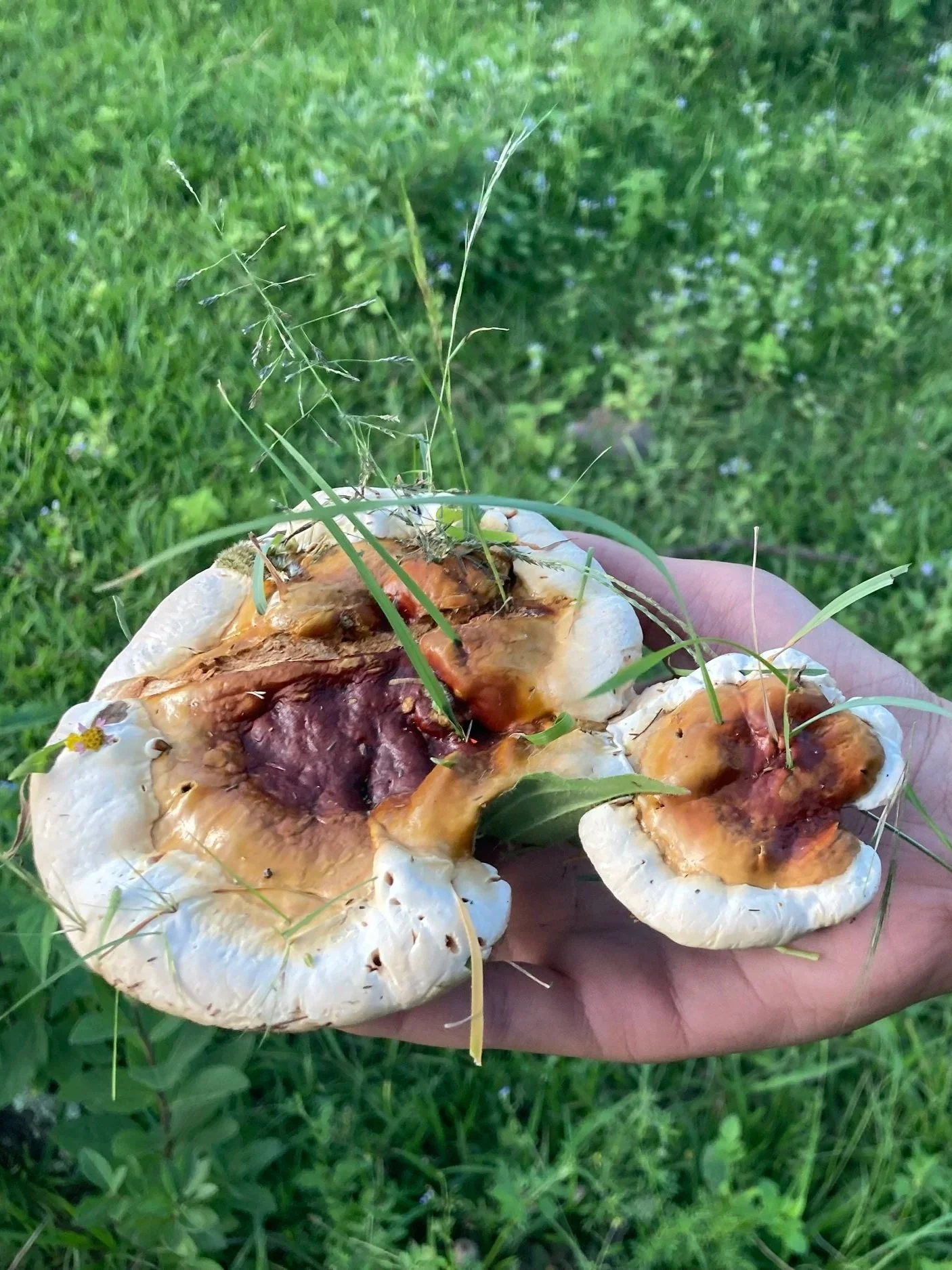
Bolivian Mushrooms and Minerals
2023
Spending time within Bolivia’s high-altitude landscapes deepened my understanding of how profoundly environment shapes both material and ways of living. The conditions are extreme—low oxygen levels, intense UV exposure, sharp temperature shifts, and prolonged dryness—yet these same pressures produce extraordinary forms of resilience and adaptation. Plants, fungi, fibres, and minerals evolve in direct relationship with the land, carrying the visible imprint of climate, altitude, and time within them.
The sense of attentiveness this landscape seems to cultivate is a new form of impressive. Life moves differently at altitude. There is a slower rhythm, shaped by the realities of the environment itself. Communities adapt with the land rather than against it, working in close responsiveness to season, temperature, and terrain. Materials are understood through lived familiarity—through observing how they soften, endure, absorb, weather, or transform over time.
I became increasingly drawn to the intelligence held within these natural systems. Crops such as quinoa, maize, and native Andean tubers develop dense nutritional structures and protective pigmentation through exposure to the climate. Fungi, minerals, grasses, wool, clay, and salt formations all reveal similar processes of adaptation and exchange.
Alongside this, there is a remarkable sense of continuity between material, landscape, and human touch. Alpaca wool, adobe, grasses, minerals, and natural dyes are worked with patiently and precisely, not through force, but through long familiarity with their characteristics and limitations.
What remained with me was the understanding that material philosophy in Bolivia is inseparable from the land itself. An awareness that resilience comes not from control, but from learning how to move attentively with the conditions surrounding you.