Mexican Desert Plants
2021
In Mexico, I came to experience the desert not as emptiness, but as a highly intelligent ecological system shaped through centuries of Indigenous stewardship. The landscape carries an extraordinary sensitivity—where survival depends on attentiveness, adaptation, and an intimate understanding of natural cycles.
Spending time alongside Indigenous communities across different regions of the desert reshaped the way I think about material, sustainability, and the relationship between land and making.
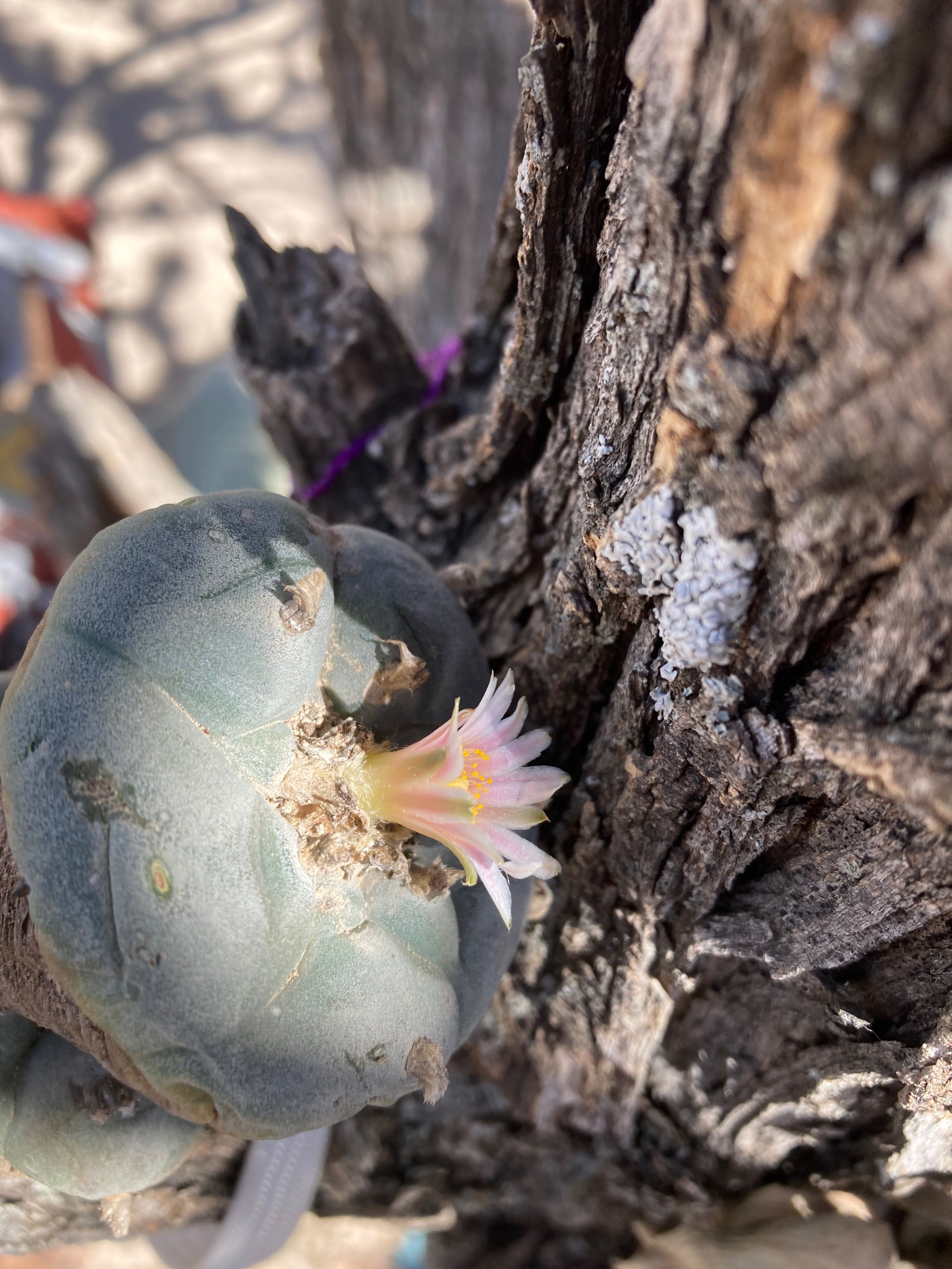
What stayed with me most was the philosophy of working with the environment rather than against it. Plants such as agave, yucca, ocotillo, mesquite, jojoba, peyote, saguaro, and creosote bush are approached not simply as resources, but as living systems with medicinal, structural, spiritual, and ecological significance. Each carries its own rhythm, resilience, and material intelligence, formed through prolonged exposure to heat, drought, and scarcity.
A thirty-day pilgrimage through the desert and into sacred mountain regions created space for dialogue, observation, and reflection. I became increasingly aware that knowledge here is not separated from lived experience. It moves through ritual, cultivation, harvesting, building, weaving, and sustained contact with the land itself.
This way of thinking has deeply informed my textile and printmaking practice. I find myself approaching material less as something to control and more as something to collaborate with—allowing fibres, pigments, textures, and layered surfaces to respond naturally through process and time.
What continues to resonate with me is the understanding that sustainability is not simply technical; it is relational. It begins with listening, patience, and recognising that material always carries the memory of the landscape from which it emerged.