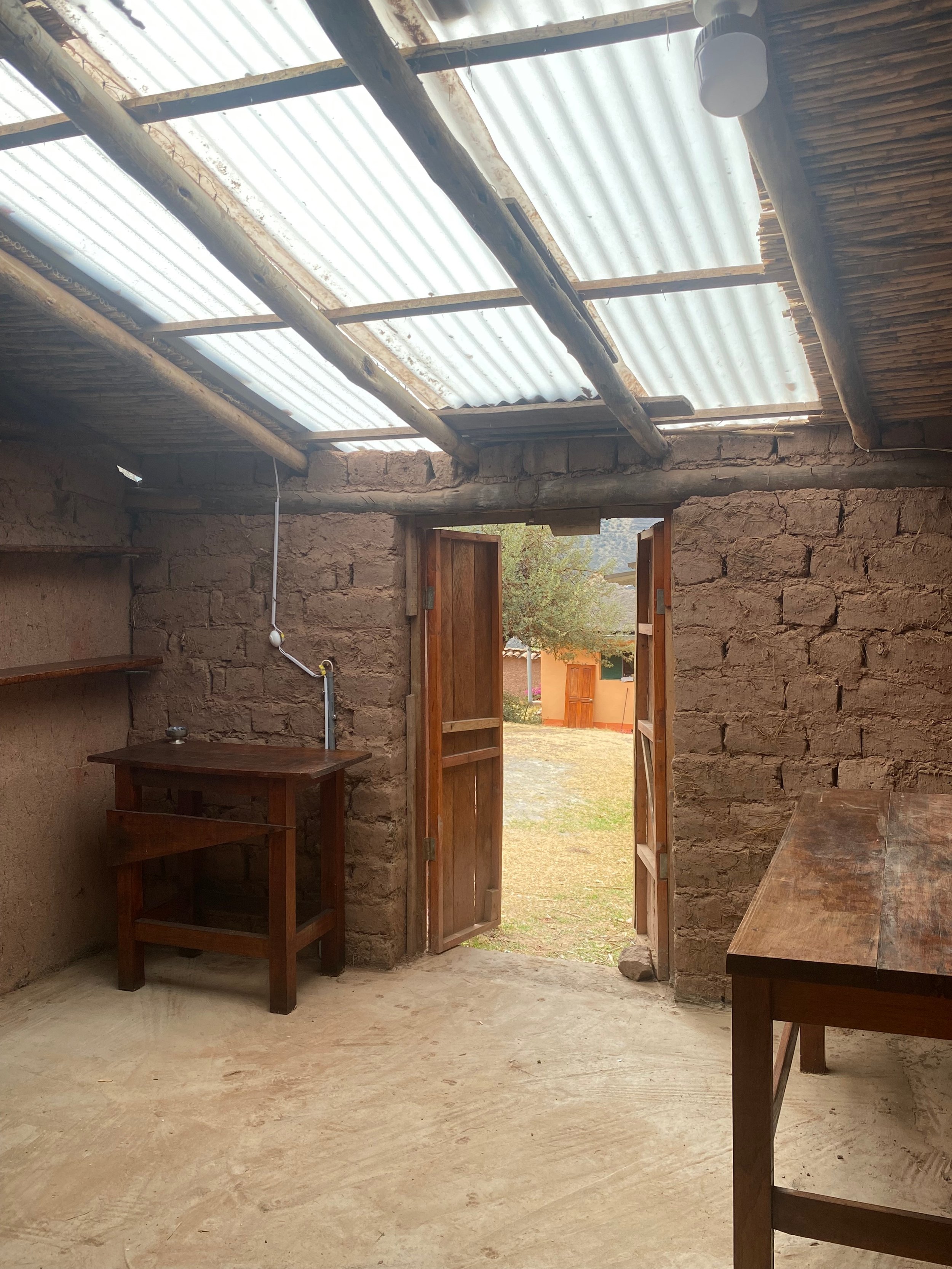
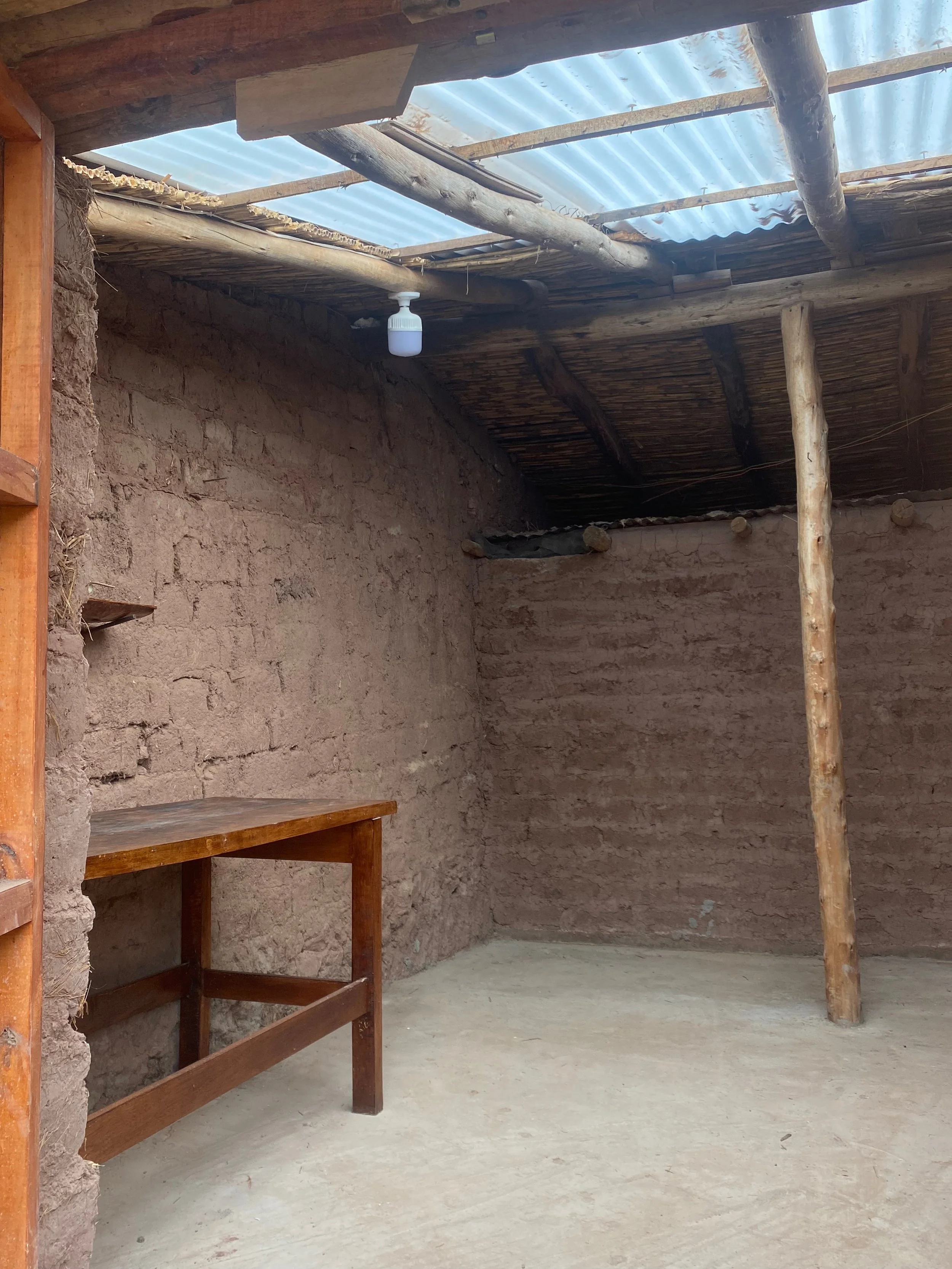
Mountain Art Studio
Mountain Art Studio was developed as a collaborative project in the Sacred Valley of Peru, creating a dedicated workspace for artists to live, work, and deepen their relationship to material, environment, and process. Built in collaboration with members of the local Peruvian community, the studio was conceived as both a practical working space and a site for philosophical & cultural exchange—bringing together international creatives and local knowledge through shared making and dialogue.
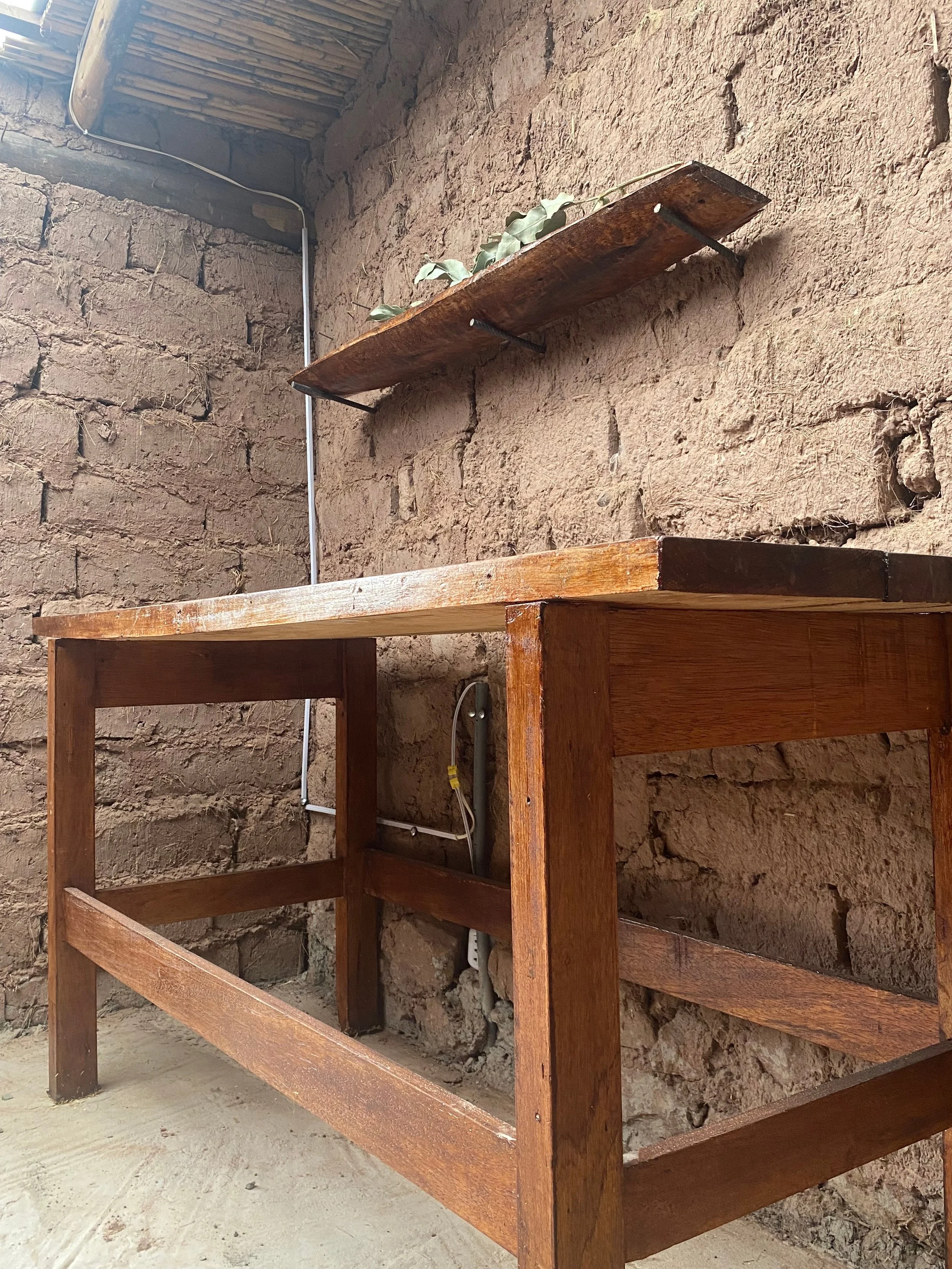
The project involved restoring and adapting an existing mountain structure into an open studio environment suited for different creative practices, textile work, natural dye processes, and collaborative workshops. Construction was approached through direct, hands-on labour: rebuilding walls, opening the roofline for natural light, stabilising surfaces, and reworking the internal space to support long-term creative use. Materials were reused wherever possible, with timber, stone, and existing architectural elements integrated back into the structure rather than replaced.
Alongside the physical build, the project established relationships with local people and active participants in working with weaving and traditional processes rooted in the Sacred Valley. The intention was not only to create a studio, but to create conditions where creatives from outside Peru could engage meaningfully with these practices through sustained exchange and shared experience.
Within my own practice, Mountain Art Studio became an important shift in understanding how environment directly shapes artistic process. Removed from the speed and structure of conventional studio culture, the work becomes slower, more attentive, and increasingly responsive to place. Adaptive.
The project strongly aligns with my wider philosophy and interest in process-led textile art exploring uncertainty, where practice develops through observation, relationship, and responsiveness rather than fixed outcome. It reinforced the belief that material knowledge is not isolated from landscape or community, but held collectively through generations of lived interaction with the land.
More broadly, the studio functions as an evolving framework for collaboration—where contemporary textile practice, traditional knowledge, and personal exchange can exist in dialogue, allowing process, material, and perception to continually inform one another.