
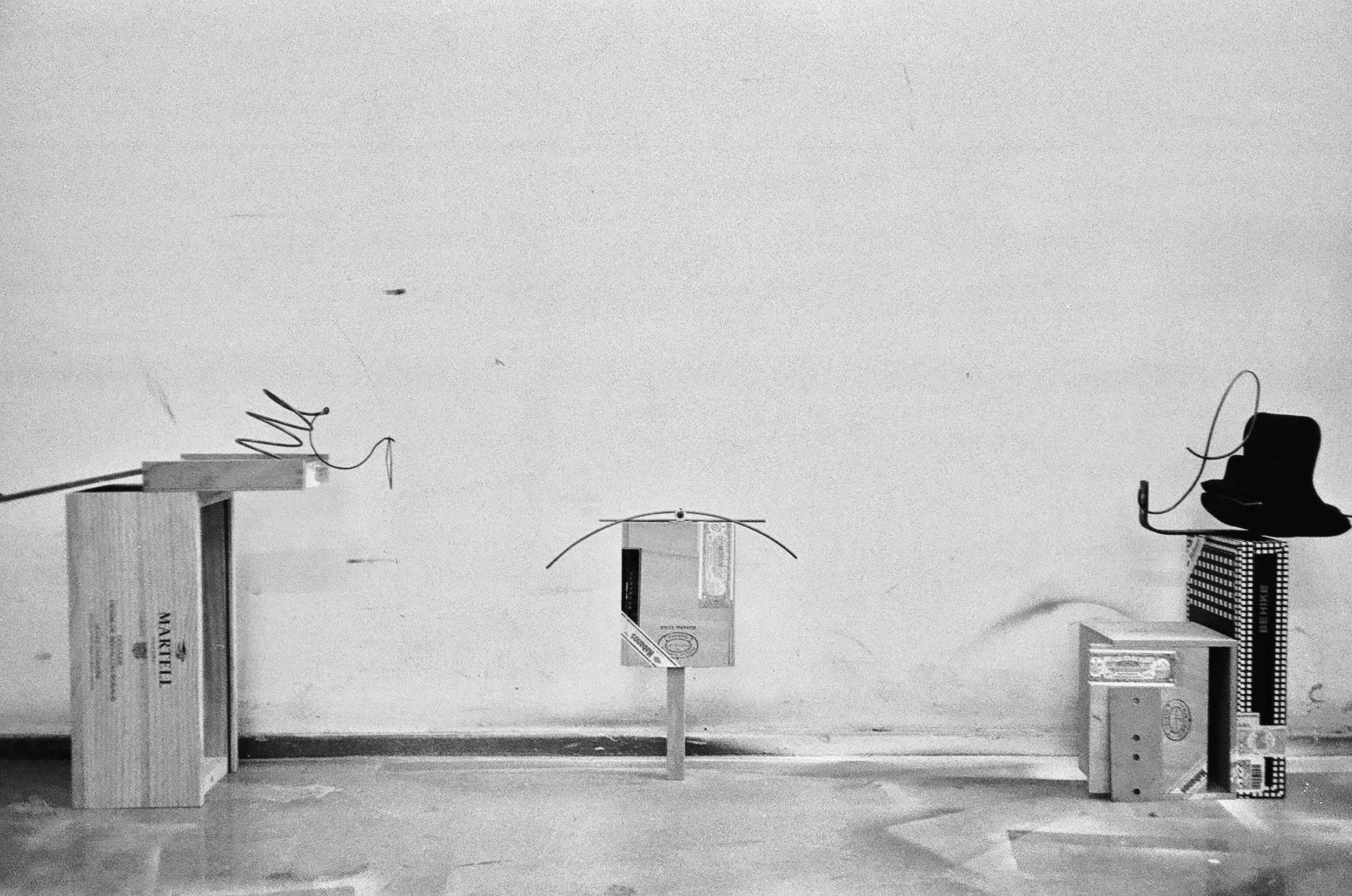
Balancing Structure
Form holding itself in space as something negotiated through weight, tension, placement, and light.
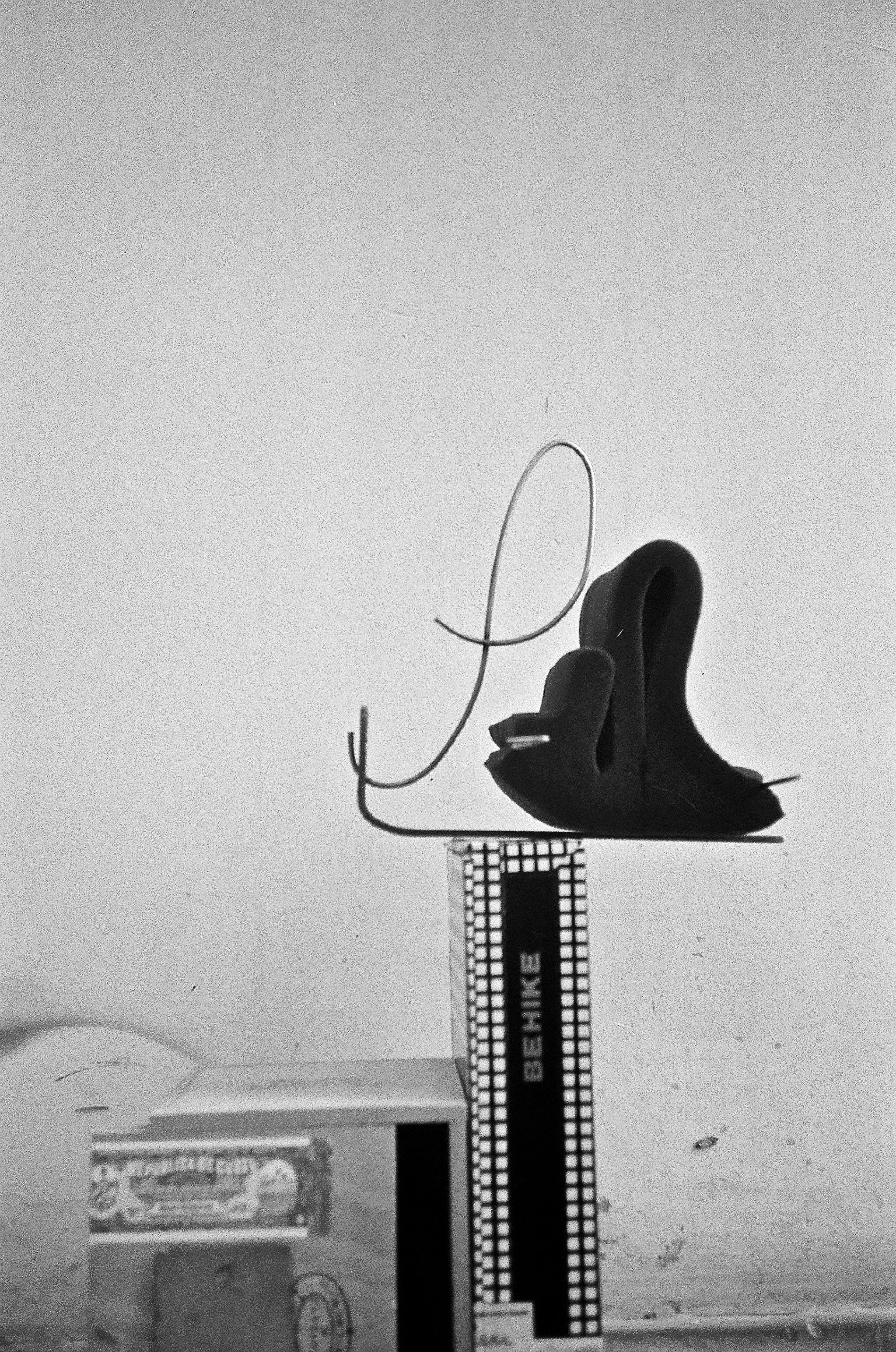
I’ve been thinking about how composition is not only visual, but physical: a dialogue between elements that are constantly adjusting in relation to one another.
When forms are suspended or carefully offset, even slightly, they begin to behave differently. Balance becomes visible. It introduces a sense of precarity—where structure feels both stable and on the edge of shifting. I’ve found that working within this condition brings a different kind of attention. It requires me to step back from control and allow the materials and their relationships to determine the outcome.
Light and shade play a crucial role in this. They extend and reconfigure the forms, creating secondary structures through shadow and reflection. What appears as a single composition becomes layered—shapes overlapping, dissolving, re-emerging. The work is no longer static; it moves subtly depending on where and how it is seen.
I’ve been experimenting with joining different materials and points of connection, allowing unexpected configurations to form. These intersections create tension, but also coherence. There’s a natural harmony that begins to emerge, discovered through adjustment and response.
Working with balance introduces an element of risk. There is always the possibility of collapse or misalignment. But within that uncertainty, new forms become possible—ones I wouldn’t arrive at through control alone.
Over time, this has shifted how I think about structure itself. Balance is not a fixed state, but an ongoing condition—one that reveals how time, space, and perception are constantly in flux.
2019