
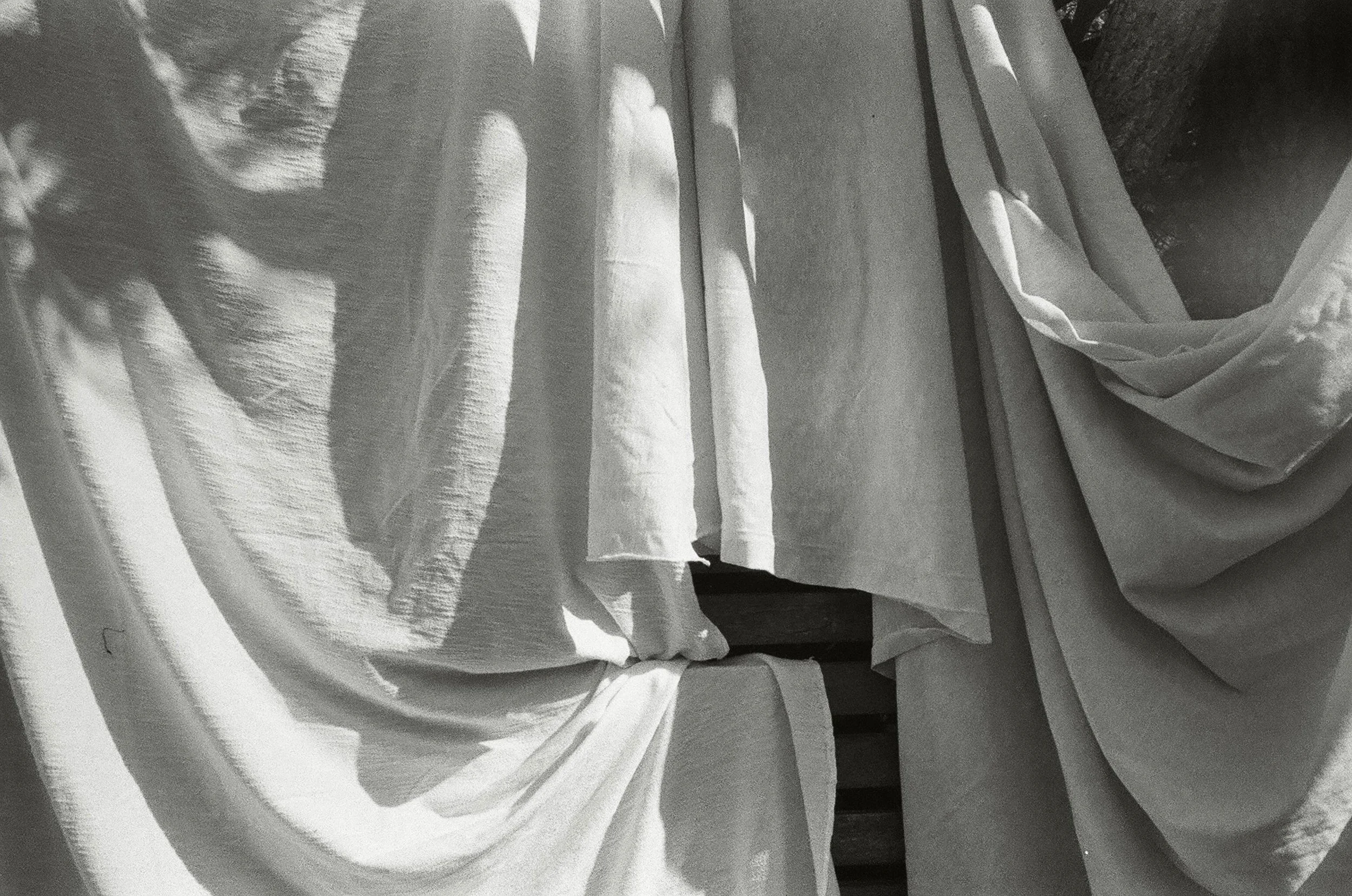
Material Architecture
When structure is still responsive, shaped as much by the material itself as by intention.
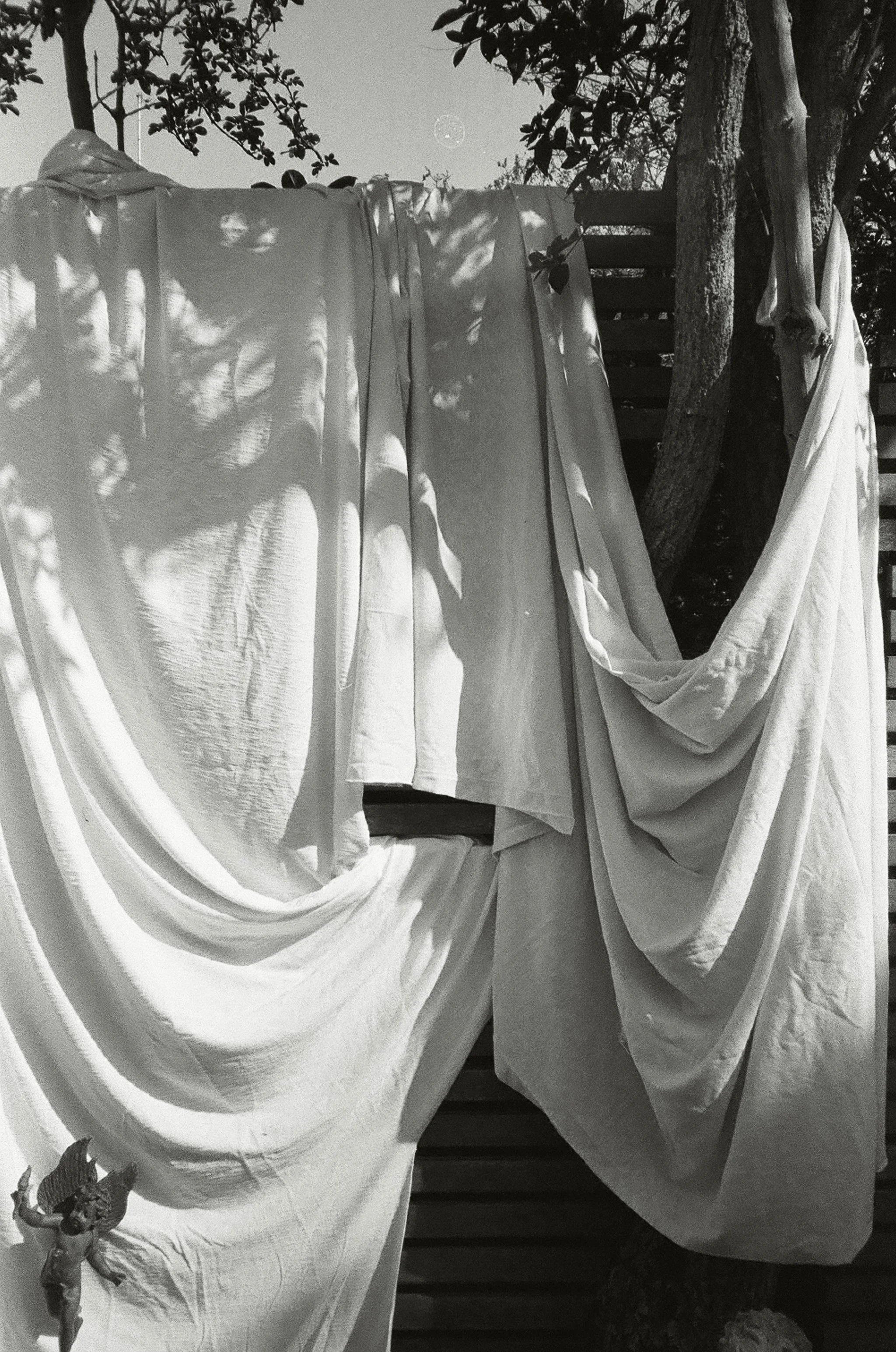
I’ve been drawn to how textiles naturally configure: how they drape, fold, gather, and settle into positions that feel both precise and unplanned. There is an inherent logic in how material occupies space, one that doesn’t rely on imposed structure.
When I spend time observing this, it begins to feel architectural. Not in a constructed sense, but in how form is held, how weight is distributed, how tension creates shape. A suspended textile can carry as much spatial presence as a built wall, but it remains fluid—open to change through movement, gravity, and light.
This brings me to a tension I return to often: the relationship between natural and man-made architecture. Built structures aim for permanence, control, and clarity. Material, in its natural state, resists this. It shifts, softens, adapts. Working between the two introduces a balance—where intervention is present, but not dominant.
I find that the most compelling configurations happen when control is reduced just enough to allow the material to assert itself. The role of the maker becomes less about directing and more about setting conditions—where form can emerge through interaction.
Light plays a defining role. It reveals the depth of folds, the density of layers, the subtle tension within the surface. What appears simple becomes complex through duration of looking.
Material Architecture, for me, sits within this balance: between structure and softness, intention and release—where form is not imposed, but negotiated.
2019